Editors Note: The following piece does not necessarily reflect the opinions or stance of TruthScript or its directors, as this is a developing story, and not all the facts have yet come to light.
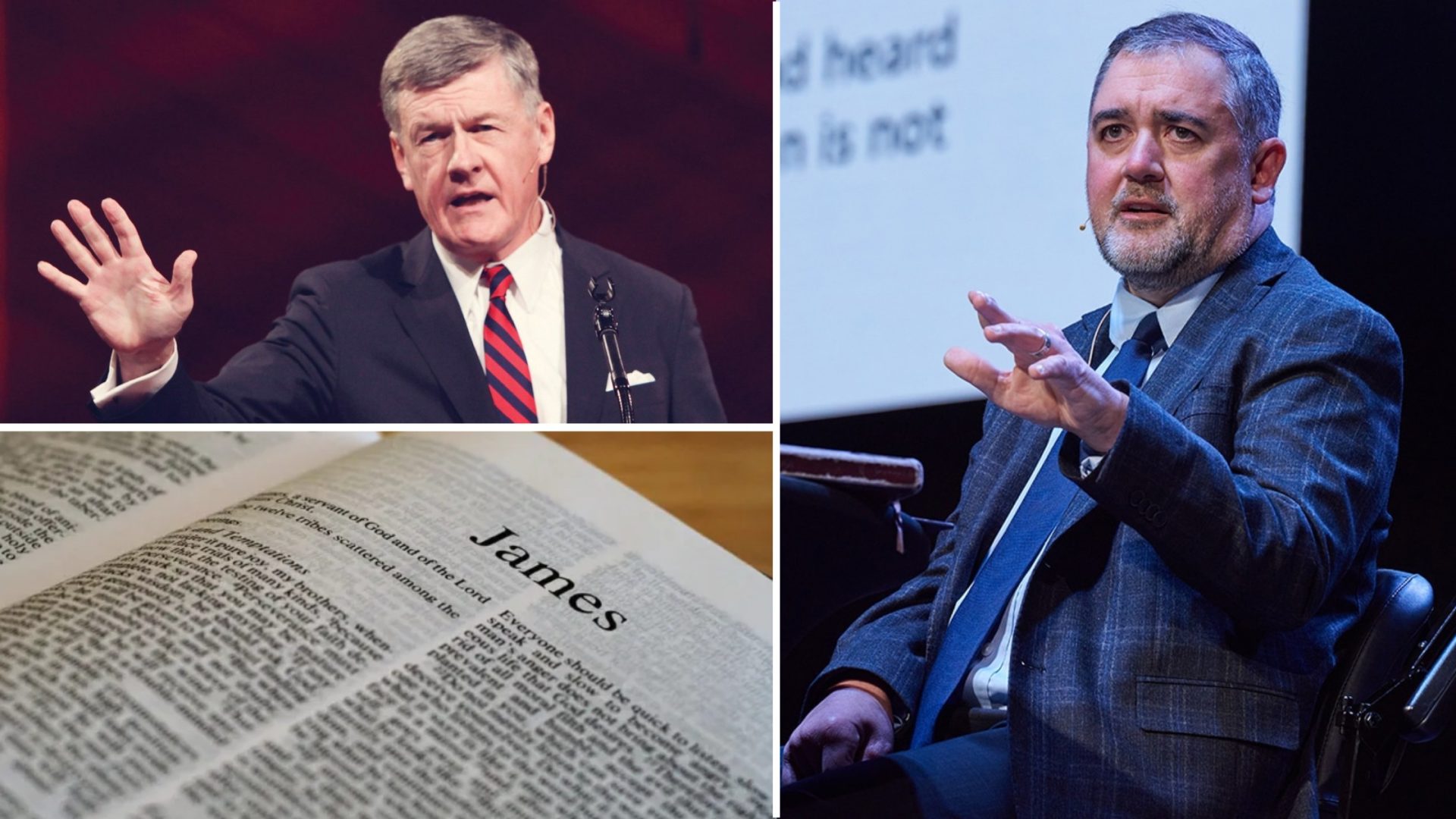
Yesterday the elders at Trinity Bible Church in Dallas, Texas announced that their lead preacher, Steve Lawson, was involved in an “inappropriate relationship” with a woman. This revelation was serious enough to lead to Lawson’s departure from TBC and likely his broader ministry career. Ligonier Ministries, where he served as a teaching fellow, and The Master’s Seminary, where he held the position of Dean of D.Min. Studies, have removed him from their respective websites.
This news has sent shockwaves through the Reformed evangelical community, particularly among those who have long appreciated the ministries of R.C. Sproul (Ligonier) and John MacArthur (Master’s). I’ve received numerous messages from friends expressing their astonishment, with one asking me if it was true. Sadly, it is. The reaction earlier this year when Alistair Begg affirmed his support for attending a same-sex wedding was similar. It raises a troubling question:
How can someone who taught the Scriptures so effectively find themselves compromised on such fundamental moral issues?
But for the Grace of God
One of the helpful things to remember first, and a warning I’ve noticed coming from wiser men, is to consider the deception of sin. As a child, I remember the familiar teaching: a lie becomes bigger the longer you tell it. All sin is like this. James 1:14-15 says: But each one is tempted when he is carried away and enticed by his own lust. Then when lust has conceived, it gives birth to sin; and when sin is accomplished, it brings forth death.
Sin doesn’t begin with the most egregious violations of God’s moral order; it often starts with small, gradual steps away from His clear teachings. It is quite literally “to miss the mark.” The arrow may only be an inch off the first time. Solomon presented sexual temptation in Proverbs 7 as cunning, persuasive, and flattering. It does not consider the potential consequences until it is too late.
For Steve Lawson, it is too late to avoid some serious consequences, but that doesn’t mean it’s too late for you if you’re struggling with similar temptations. The potential for grievous sin is always close to a heart that thinks too highly of itself. We must remember the tools God has provided to help us gain victory over temptation—no matter what form it takes. Steve Lawson was surrounded by theology, adored by fans of expository preaching, and stood at the pinnacle of Reformed evangelicalism. Yet, in the end, his battle was the same every common person faces, between his own flesh and His God.
Courage as a Window to Character
While acknowledging the allure of temptation for a prideful heart is crucial, it doesn’t completely address a pressing question: Why are scandals arising more frequently in circles that seem otherwise theologically sound?
When King David fell into sin with Bathsheba, it was preceded by a lapse in another duty. In 2 Samuel 11:1, we see that David stayed home when he should have joined his army in battle. This decision ultimately placed him in a position to see Bathsheba bathing from his roof and allowed for an immoral relationship to develop. My lack of surprise regarding Lawson’s situation partly stems from my observations of social justice movements within evangelicalism over the past few years. Reactions to these movements have served as a barometer for individual courage, revealing deeper insights into character. When social justice came knocking, did they stay home, or did they go to battle?
In the case of Steve Lawson, he would not sign the Dallas Statement on Social Justice. He did not weigh in on social justice, at least not publicly, to my knowledge, until 2022 when he received a question at a Bible study. He expressed his disapproval in a somewhat general way without naming names. I was encouraged at the time. [1] However, a few months later, Lawson endorsed Paul David Tripp’s book, “Do You Believe?” This surprised me, especially since it was well-known that Tripp attended Epiphany Fellowship, led by the author of “Woke Church” and reparations advocate Eric Mason. Tripp had also controversially stated in 2018 that he had been complicit in advancing an “incomplete gospel” because he had preached “the gospel of God’s grace” for his entire ministry but left out “the gospel of [God’s] justice.” [2]
Phil Johnson, CEO of Grace to You, expressed concerns about Tripp’s issue during the infamous Shepherd’s Conference Q&A panel in 2018. In “Do You Believe?” Tripp even complained about how he’s called a Marxist when he addresses racial injustice seeing this response as the symptom of a disconnect between Christians’ theology of grace and justice and their practical lives. Yet, attacking this supposed disconnect is what Lawson endorsed. He said of Tripp’s book: “In this important book, Paul Tripp puts his finger on a live nerve in the body of Christ. He addresses the dangerous disconnect that often exists between sound doctrine and sound living.” [3]
For the record, this doesn’t mean that Lawson is “woke.” It means he, unlike John MacArthur, failed to protect the sheep from “wokeness” when it mattered and continued to preach alongside people like Ligon Duncan and Tim Keller without squarely facing the issue. [4] At key moments, like when his influence could have helped the men I knew who confronted Al Mohler for allowing CRT ideas at Southern Seminary, he was absent from the battlefield.
The Illusion of Image
This may offend some, but Steve Lawson fit my own personal impression of someone whose image was made for the upper levels of the Reformed evangelical conference circuit long before this incident. Some of this comes down to what some may consider petty things. But, I don’t think they are taken as a whole. Expositors on the conference circuit are generally revered for their accurate preaching and professional persona.
Lawson presented well with his wardrobe of overfolded pocket squares, cuff links, signature striped ties, and tailored suits. His preaching was technical, sophisticated sounding, and left little room for practical asides. He fit the image of a specialist in handling God’s Word. I almost thought I could see a glow coming from his well-lotioned hands, soft from turning pages. He was not what you would call a wartime leader. His very clean-cut image signaled all was well. For these reasons, and others relating to my own impression of Lawson’s softer mannerisms and what seemed like overly scripted messages, I never cared for his preaching.
My overall impression was that there was an overproduced quality to Lawson that seemed to conceal who he was, something I never wondered about in preachers like John MacArthur or R.C. Sproul. For example, I knew MacArthur’s wife was Patricia, his grandkids distracted him from his work much to his delight, and personal stories from his own experience. His views on politics and other cultural matters flowed naturally from the pulpit.
Lawson was different. He was the kind of expositor who played well with others on panels, spoke from study more than experience, avoided politics, and focused on threats to the Reformed evangelical brand, like charismatic theology and Arminianism, more than general threats facing all American Christians like social justice.
While Lawson traveled extensively, often without his wife, he juggled an impressive array of responsibilities: writing books, leading One Passion Ministries with its Center for Expository Preaching and Expositor Magazine, and participating in conferences alongside his academic roles at Master’s and Ligonier. Lawson’s focus allowed him to master the formula, satisfy the expectations of his peers, and create the materials that positioned him at the top of his field.
Now that I’ve sufficiently offended all the Steve Lawson fans who genuinely gleaned from his ministry, let me also say that Lawson was a gifted speaker and most of what I heard him say was true. I do not for a second minimize the way God used him to communicate truth. Neither do I remotely blame anyone for not seeing Lawson from my perspective.
I bring my impressions up now to ask a larger question: Is it possible, that even in the most conservative Christian circles there is a pressure to emphasize image, group acceptance, and the accolades of prominent ministries over virtue?
This is a genuine problem in all managerial institutions today. But, I think some Christians tend to believe their organizations aren’t affected by these forces. We are accustomed to thinking the larger ministries are more heavily vetted—therefore safe—than the smaller ones. I can tell you in no uncertain terms that all my research on social justice confirms the exact opposite of this.
I’m concerned that by the point someone makes it big in evangelicalism we give approval to them mostly based on superficial qualities and technical skills. The limelight will always encourage pride. That’s unavoidable. And pride will always open the door for temptation. But we are given qualities to look for in elders. Someone can be a good teacher yet fail to defend biblical truths effectively. They can be gentle but lack discernment. It is difficult to detect some of these important weaknesses in conference settings where only certain qualities need to be manifested.
Formulas Don’t Protect
If there’s a point to be made aside from seeing Lawson’s fall as a warning, I think it is this: Formulas will not protect us. Lawson fit a common mold in a certain quarter of evangelicalism that emphasizes expository preaching, a plurality of elders, cessationism, and Calvinistic soteriology. These qualities are what many in these circles think make someone “solid.” Not only did Lawson check all the boxes, but he looked the part. The problem was that his character was lacking. Some of the deadliest threats are not addressed by believing the right things on these issues or carrying institutional credibility.
I pray for Steve Lawson with the assumption that he is a Christian caught in sin and in need of truly spiritual people to help restore him to repentance as Gal 6:1 instructs. But I fear for American Christianity. Our leadership class is thin at the highest levels and in desperate need of replacement from godly men. As many have said to me: “John MacArthur can’t live forever, but who will replace him?” I’m increasingly coming to the opinion that God will work all of this out. After all, the gates of hell will not prevail against Christ’s church. But are we prepared to embrace a different paradigm? One less formulaic and more virtue-focused? Perhaps a newer paradigm looks like one that rewards sacrifice for truth more than avoiding necessary conflicts. One that’s less technical and more practical.
Perhaps the disappointment some of us feel right now is a good opportunity to thank God for that local pastor who never made the limelight but was faithful. Maybe it is time to elevate that person in our minds and with our resources over more distant celebrity-level pastors. At the end of the day, this is ultimately a good reminder to put our confidence in God and not men.
Sources
[1] https://www.youtube.com/watch?v=qXFz0bGUKGQ
[2] https://www.paultripp.com/articles/posts/my-confession-toward-a-more-balanced-gospel
[3] https://www.amazon.com/Do-You-Believe-Historic-Doctrines-ebook/dp/B097J1D27Y/ref=tmm_kin_swatch_0?_encoding=UTF8&qid=&sr=
[4] https://jakarta2020.stemi.id/speakers; https://puritanconference.org/speakers