
This past Spring while attending a pastor’s conference, I heard a speaker give a presentation on a subject related to pastoral involvement in the political process. The speaker admonished pastors to refrain from being involved in the political process, from guiding their congregations through the issues, and even refusing to let voter guides be distributed in their churches. Frankly, his exegesis was poor, he was quite ignorant of our nation’s heritage and how our political system works, and he had a severe case of pastoral neglect with which he was trying to infect others.
Two Kingdoms
The two kingdoms are not church and state set against each other, but rather Satan’s realm and the Kingdom of Heaven. Those who belong to Christ are citizens of Heaven and have a responsibility to live out Its reality as ambassadors for our King. We do this by being obedient to the commands, precepts, and principles of His word and proclaiming them to everyone in Satan’s realm.
Yes, that includes the area of politics.
A pastor has a responsibility to teach his people God’s word and apply it to every aspect of life, including political decisions. This should be even more so when such great moral issues are at the forefront of those political decisions.
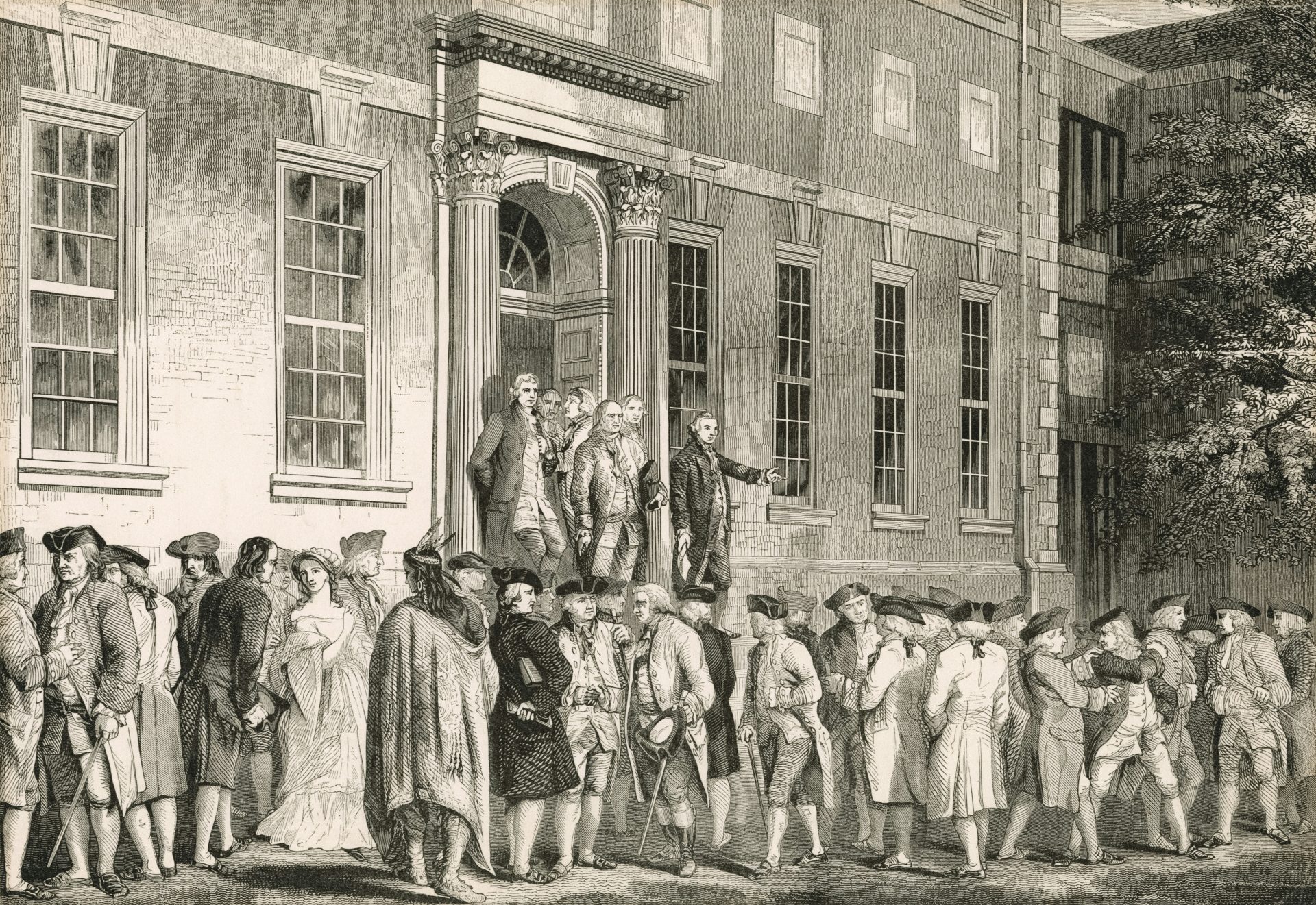
The advocation of a “wall of separation between the church and state” is neither Biblically nor historically true. The phrase comes from a letter by President Thomas Jefferson to the Danbury Baptist Association regarding fears of interference from the state of Connecticut. The political systems in the United States churches have a historical right and responsibility to be involved in the political realm. At one time, many states required those running for office to be members of a church because Christianity and Christian thought were fundamental to their founding. Christians must work to ensure that our religious values are part of the political discussion despite the opposition from secularists and their allies. The restrictions on 501(c)(3) organizations are invalid on churches because a church is tax-exempt by virtue of being a church and does not need to have that specific status.
While there is wisdom in cautioning pastors about how involved they may become in politics (lest they neglect their regular pastoral duties), pastors do have a responsibility to apply the truths of God’s word to the issues of the day so that the congregation can learn God’s moral will, be involved, and vote accordingly. Politics is simply the art and science of public affairs and the government of a state, and a politician is simply a person who is involved in those politics. How good or evil the politcs may be depends on who is involved. None of the various reasons being currently used to dissuade Christians from political involvement and voting are valid – some are irrational.
Christians & Government
Discussion of the responsibilities between Christians and the Government is not the purpose of this piece. But it is necessary to point out that Romans 13 delineates both the God-given responsibilities of governments to be “a minister (diakonos) of God to you for good,” and a cause of fear as “a minister of God, an avenger who brings wrath upon the one who practices evil.” The Christian’s responsibility to government is to be in subjection to and render to all what is due them including taxes, custom, fear, and honor as is appropriate.
Christians & Politics in a Democracy
While God sovereignly sets in office the individual of His choice, either as a blessing or a curse, in a democratic republic this occurs through its citizens. It is they who have a direct responsibility in selecting their representatives and petitioning them on particular, pertinent issues. If the government officials are good, the people will reap the blessings that come with wise choices. If the government officials are corrupt and evil, the people will bear the consequences that come upon them because of those they elected to office. The Christian citizen must apply Biblical principles when choosing a candidate and addressing the issues of the day.
Responsibilities
The Christian citizen must be serious about voting and then vote for the candidate that would best fulfill the purposes of government in promoting good and repressing evil as God defines them. Christians are responsible for striving to see God’s standards upheld and so must work hard to elect godly candidates to office – perhaps even when this means running themselves. A godly government is a blessing to all people as stated in Proverbs 29:2, “When the righteous increase, the people rejoice, But when a wicked man rules, people groan.” However, care must be taken to avoid the trap of substituting the quest for a godly human government as a quest for the kingdom of God. They are not the same.
The Christian citizen must also stand in opposition to governmental representatives, officials, and policies when they are contrary to the clear teachings of God’s word. It is wrong to take God’s sovereignty in some mystical sense by which it is thought that God approves of whoever got elected and therefore submission is to be without opposition. That mindset can easily result in fatalism and is contrary to the Biblical examples throughout the Scriptures such as Samuel, Nathan, Jeremiah, other prophets, and John the Baptist. Jesus pronounced plenty of woes upon the Scribes and Pharisees, many of whom were in the Sanhedrin, which was a governing body. Jesus pointed out the guilt of those who had delivered Him to Pilate, but He still held Pilate responsible for his judgment. Jesus will overthrow all human governments in the future (Revelation 19). When God’s moral laws are transgressed and His purposes for government are not fulfilled, it is not only right but necessary to be in opposition, especially so in a democracy.
Priorities
There are many important political issues, but for the Christian urgent, moral issues are much more critical than particular economic systems and policies (though these involve morality as well). Since political candidates will be a mixture of various moral standards, it will be rare to find a candidate who rates well on every issue. You must look for the best candidate, not the perfect candidate. Third-party candidates may be a good option, or if no candidate is tolerable, write in a name as a protest vote. That may be a legitimate action to take as part of our political process. However you vote, you will need to be able to go to sleep that night with a clean conscience.
Remember, your vote is a duty, an obligation, and a responsibility, but it isn’t a sacrament.
Evaluating the Candidates and the Issues
What follows is my listing of major issues in my order of priority. Yours may differ slightly, but I think that any Bible-believing student of God’s Word will come up with a similar list. Other issues may also be important, but they would be of lower priority.
1) Life: The first moral priority is human life. God is the creator of life and all human life is made in His image, and so has inherent worth (Genesis 1:26-27). This is why God prohibited murder and required capital punishment for those who did (Genesis 9:6). Other punishments were given for those who accidentally killed a human (Numbers 35). One of the reasons for the destruction of Judah was the cry for justice by the innocent blood of those murdered (2 Kings 24:2). The Bible is also clear that human life begins in the womb where God forms us (Psalm 139:13). God knew and consecrated Jeremiah while he was in his mother’s womb (Jeremiah 1:5-6). John the Baptist recognized the presence of Jesus and leaped for joy while both were still in their mothers’ wombs (Luke 1:41-44). To kill a baby in the womb is to destroy the work of God and attack His image. Abortion, infanticide, and euthanasia are all murder of a human being. What value does the candidate put on human life?
Sadly, it must be pointed out that the Democratic party platform as well as some minor parties are unquestionably pro-death. They advocate abortion as a national right without restrictions and without care for abortion survivors. They advocate and promote abortion to be funded by the taxpayers and insurance carriers. Many candidates are also strong supporters of euthanasia with fewer and fewer restrictions. Any Democrat candidate would have to be an exception to the party platform before a Christian could in good conscience vote for him or her.
2) Protection: Protection encompasses both internal and external threats. A police force and local militia protect against local threats while armed forces protect against threats from other nations. The very fact that armed forces can be used by evil men for evil purposes proves the necessity of having armed forces to protect against those who would do us evil. Those who founded the United States understood this which is why the U.S. Constitution enumerated the need for an army, navy, and militia to suppress insurrections and repel invasions (Article 1, Section 8). The role of the President as the Commander in Chief (Article 2, Section 2). A nation that does not protect itself – especially its own borders from illegal immigration – ceases to be a nation. Does the candidate understand the protective role of government both locally and nationally and advocate law and order? Does the candidate understand the necessity and proper use of armed forces as well as diplomacy in averting war (Proverbs 20:18; Luke 14:31)?
3) Justice: Government has the responsibility to establish and execute justice, and to the degree a government deviates from God’s standards of justice is the degree to which it is failing. I will quickly add that so-called “social justice” is not Biblical justice. True social justice is an equality of fairness in the application of the law and not equality of outcome. The word for government involvement to bring about equality of outcome is “stealing.”
Justice must also be carried out with the right attitude. Micah 6:8 succinctly states,
“He has told you, O man, what is good; And what does the Lord require of you But to do justice, to love kindness (or mercy), And to walk humbly with your God?
This statement encompasses what you do, desire, and are. We are to be merciful because we have received mercy from God (Matthew 5:7; 18:21-35), but mercy without justice is injustice and an abandonment of the protective role of government. Does the candidate uphold the rule of law interpreted according to what is written and original intent? Does the candidate advocate or oppose a law based on Biblical standards or something else? Does the candidate have personal integrity?
4) Morality: Isaiah 5:20 pronounces a woe upon those “who call evil good, and good evil; Who substitute darkness for light and light for darkness.” Some things are especially evil, often referred to in the Old Testament as an abomination (toebah), which should receive priority in a government’s protective efforts and application of justice. The list in Leviticus 18 includes immoral sexual practices of homosexuality, incest, fornication, adultery, and bestiality alongside child sacrifice as abominations that defiled the land. Abortions are this nation’s child sacrifices to feminism. Sexual immorality and perversions not only destroy the social structure necessary for a healthy society, but they also spread a host of diseases that weaken the nation. Does the candidate seek to uphold and protect the sacredness of the family and marriage between a man and a woman? Does the candidate seek to protect children and the family from the LGBT+ agenda?
5) Personal Integrity. This is important, but less so than the issues already discussed because even a scoundrel can do what is right, but integrity easily distinguishes between otherwise similar candidates. Proverbs 6:16-19 is helpful in understanding God’s assessment of people and therefore in evaluating a political candidate’s personal integrity.
“There are six things which the Lord hates, Yes, seven which are an abomination to Him: Haughty eyes, a lying tongue, And hands that shed innocent blood, A heart that devises wicked plans, Feet that run rapidly to evil, A false witness [who] utters lies, And one who spreads strife among brothers.”
These various abominable characteristics describe the politics of personal destruction, an evil but effective tactic used to gain and keep political power. What is the personal integrity of the candidate? Is the candidate able to hold convictions firmly without being either obstinate or lying?
Conclusions
There are many other Biblical issues, such as stealing and graft, that could also be addressed and should be applied to politics. I aim to simply stimulate thinking according to biblical values and priorities instead of political ones when voting, running for public office or serving in one. Policy positions are very important, but so are moral character and personal integrity to carry out those policies and promises. Since perfect candidates do not exist, evaluate carefully and make the best vote you can among imperfect candidates. Rate the candidates according to both their policy positions and personal integrity, but keep in mind that not every moral failure is equivalent. Being polite and kind is not nearly as important as upholding life, and morality and fulfilling the God-given functions of government to promote good and suppress evil. While you want your candidate to win and may work hard to achieve that, your primary goal is to please the Lord, not merely to be on the winning side.
Related Posts
-

The Devil’s Work Following Charlie Kirk’s Murder
Seth Brickley
-

Citizen Vigilante: Trolling or Bait?
Roy Timpe
-
The Declaration of Independence: A Secession Document Rooted in Heritage and Self-Government
Jon Harris
-

When Civilization Forgets Genesis: The Moral Chaos of Rejecting the Creation Order
Jason Mills