The Misguided Politicization of the Cultural Mandate
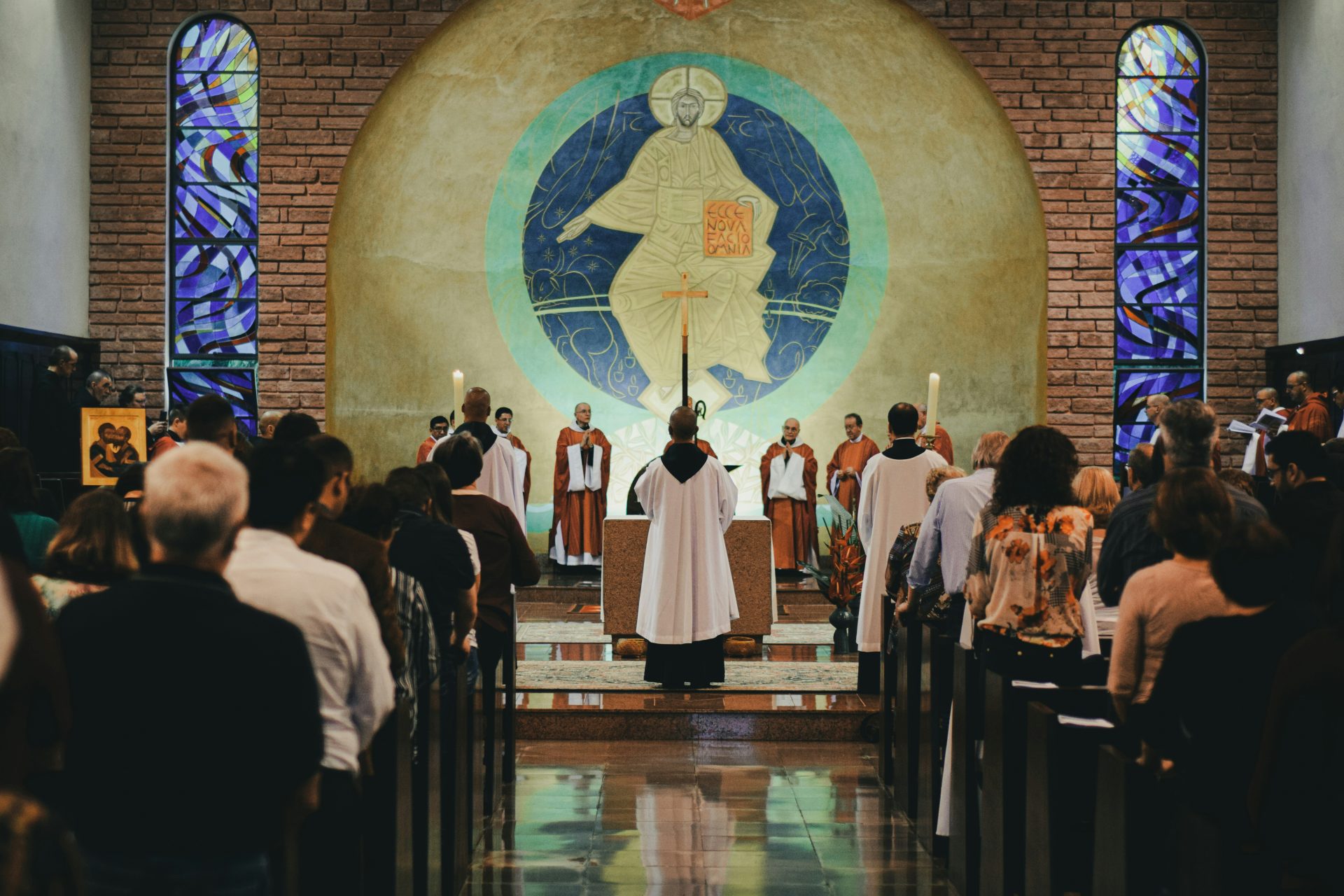
Not only does Christ Himself fill His church (see Part 1), but His church fills the earth. The local church is a garrison, a military post in enemy territory. The church’s task is to advance ever deeper into Satan’s realm, to plant the flag of Christ’s Kingship in every city, to establish sister garrisons as we live by faith in the promise “I will build My church, and the gates of Hades will not prevail against it.” (Titus 1:5; Matt. 16:18).
This filling is an extension of the cultural mandate given to Adam & Eve, “…be fruitful, multiply, and FILL the earth” (Gen. 1:28). This filling is not speaking to population, the word “multiply” already speaks to that. Rather, it speaks to culture (the next use of this term “fill” is found in Gen. 6:11, 13: “the earth was filled with violence.”) However, there is a rising spirit in professing Christianity that neglects having the all-encompassing desire to glorify Jesus Christ.
Instead of elevating Christ and His body, many today have bowed to the idol of activism. Every gathering, every word, every loyalty is conscripted to serve political narratives. And what is tragically lost in this fervor is the reality that what we fix our gaze upon, we are being shaped by (2 Cor. 3:18). Even among those who rightly affirm the necessity of church membership, there is a grievous drift. National agendas replace Christian responsibilities. Cultural warfare eclipses pastoral care. This is not the heart of a kingdom citizen. This is not fighting the good fight. The culture such people propagate will fill the earth, not with the beauty and glory of Christ, but with the adulterous idolatry of religious autonomy.
In their zeal to transform the culture, these traitors abandon the household of God while still deceptively professing allegiance with their lips. This is not wisdom. It is idolatry disguised as patriotism. It is apostasy dressed in red, white, and blue. They clamor for change and reform while forsaking the very institution Christ ordained to bring about that transformation through the display of His glory. The church is not a side piece in God’s redemptive plan. It is the centerpiece. Christ died for the church (Eph. 5:25), builds the church (Matt. 16:18), governs the church (Col. 1:18), and will glorify the church (Rev. 21:2). Any worldview that sidelines the church in favor of national, social, or political movements—no matter how noble—is a doctrine of demons (1 Tim. 4:1).
Does this mean we forsake our calling as salt and light? Absolutely not. The cultural mandate (Gen. 1:28) is not revoked by the redemptive mandate (Matt. 28:18-20). They are not enemies—they are allies. Dominion and discipleship are not at odds. Christ is Lord of all. The gospel does not cancel our responsibility to build, plant, raise families, enact justice, and reform society—it energizes and purifies it.
But here’s the point: You cannot fulfill the cultural mandate rightly if you forsake the church. The church is the womb from which true reform is birthed. It is the training ground, the accountability structure, the source of gospel-centered power for all godly cultural engagement. You want to save the nation? Start by submitting to the elders Christ has given you, gathering with the saints Christ died for, and walking in holiness with the body Christ is sanctifying.
Political fervor without ecclesiastical faithfulness is a recipe for cultural hypocrisy. It is within Christ’s church that God has ordained our equipping for every good work not only in the church, but in society and in the home as well (Eph. 4:10-16; 1 Tim. 3:15; 2 Tim. 3:16-17). Let judgment begin with the household of God (1 Pet. 4:17), and let reform begin at the Lord’s Table.
The Necessity of Membership: Not Optional, But Obedience
Let’s cut through the nonsense. You say you love Jesus, yet refuse His body. You say you follow Christ, yet wander from His fold. Let’s not pretend. This is rebellion. No amount of theological gymnastics will justify it. Church membership is not optional. It is not an advanced-level spiritual elective for the elite few. It is basic obedience. It is Christianity 101. Jesus Christ is not your personal assistant. He is King. And He commands His people to be visibly and locally joined to His body (Acts 2:41-47; 1 Cor. 12:12-27). To neglect membership is to sin. Period.
“Oh, but I belong to the invisible church,” you say. So says every heretic who left the visible one. That’s not spirituality. That’s a cop-out. Christ’s sheep hear His voice and follow Him—not merely into private devotion, but into a visible fold, under appointed shepherds, among blood-bought brothers and sisters. To walk in isolation is to defy the voice of the Shepherd. The Shepherd does not recognize self-appointed loners who graze in fields of their own choosing (Isa. 53:6). Return to the flock.
Objections: Sin’s Propaganda Campaign in Your Own Heart.
So let’s expose the soothing fictions you repeat to numb your guilty conscience for resisting Christ’s command. Here are several serpentine fig leaves that people use to keep themselves from joyful obedience to Christ.
Objection 1: “Church membership isn’t in the Bible.”
While the term “church membership” is not explicitly stated, the concept is everywhere assumed in the New Testament, just as with the term Trinity. The early church was clearly structured, organized, and maintained clear distinctions between those inside and outside the body (1 Cor. 5:12-13). Pastors knew who they were accountable for (Heb. 13:17). Members knew who their leaders were (1 Thess. 5:12-13). Church discipline assumes the existence of a defined group (Matt. 18:15-17). If leaders are to give an account for specific people, and if members are to submit to particular leaders, then there must be a mutual, recognized relationship. Membership is simply the formal expression of that commitment.
Objection 2: “I don’t need to be a member to be a Christian.”
That is true—justification is by faith alone. But this objection misses the point. Membership is not about becoming a Christian; it is about living as a Christian in obedience. A believer is united to Christ’s body (1 Cor. 12:12-27), and that union is meant to be visibly expressed through covenant fellowship in a local body. Being “part of the body of Christ” is not emphasizing the individuality of the Christian life but the integration of distinct parts in union with each other. God designed the Christian life to be lived in covenant community. Membership is not a salvific requirement—but neither is baptism, or living a holy life—and yet these are not only commanded, but fruits of true salvation.
Objection 3: “I’ve been hurt by the church.”
No one denies that people are hurt at church—because churches are made up of sinners. But Christ does not give us permission to forsake obedience based on wounds. In fact, the gospel calls us to forgiveness, reconciliation, and humility. Christ Himself was wounded by His people, and yet He gave Himself for them (Eph. 5:25-27). If you’ve been wounded, the answer is not isolation—but healing through biblical community. Also, not all wounds are bad: “Faithful are the wounds of a friend,” (Prov. 27:6). Either way, we don’t discipline ourselves out of Christ’s body because of man’s failures—we press in, and obediently model love better than those who hurt us.
Objection 4: “I can worship God just fine on my own.”
Yes, you can worship God privately. But private devotion is never a replacement for corporate worship and community life. The New Testament assumes gathered worship, shared ordinances, mutual edification, and collective accountability. 1 Corinthians 14:26 says, “When you assemble…” not, “if you choose to assemble.” Christianity is not a solo religion. Rather than pretending we are doing church at home or on a hike, Christians are commanded not to be “forsaking our own assembling together…” (Heb. 10:26). You were saved into a people, not just out of sin. You can’t baptize yourself, partake of the Lord’s Supper alone, or fulfill the “one another” commands of the New Testament apart from the body.
Objection 5: “I don’t agree with everything the church teaches.”
Disagreement is not always rebellion. No church is perfect, and full agreement on everything is rarely the standard for membership. The real question is: Is this a faithful church where the gospel is rightly preached, the ordinances rightly administered, and discipline rightly practiced? If so, commit to it—and humbly work through secondary issues. We are to be “diligent to keep the unity of the Spirit in the bond of peace,” by, “being of the same mind, maintaining the same love, being united in spirit, thinking on one purpose,” and that one purpose is the magnification of the glory of Christ, not our own (Eph. 4:3; Phil. 2:2). Remember that unity is not uniformity. We can pursue love, maturity, and correction within the covenant of membership. Withholding commitment because of disagreement is often just pride dressed up as discernment.