
Are We Following The Roman Empire’s Path of Decline? Part 2: A Fixation with Entertainment and Luxury
The Love of Show and Luxury
In Part 1, I explained historian Edward Gibbon’s first two reasons why the Roman Empire fell. As he looked at its history, he noticed a great decline in the quality of art. Good art comes from an ethical society that understands what is true, good, and beautiful. Bad art was a symptom of deeper moral problems that led to Rome’s fall. As poor art was a symptom, there were other symptoms as well. We will now look at Gibbon’s third reason for the Roman Empire’s decline and eventual fall: “A Mounting Love of Show and Luxury (Affluence).”
One author summarizing Gibbon’s observation wrote, “Gibbon highlighted the growing emphasis on spectacle and extravagance, with the wealthy increasingly indulging in lavish displays of wealth and power.”
Entertainment and Extravagance in Abundance
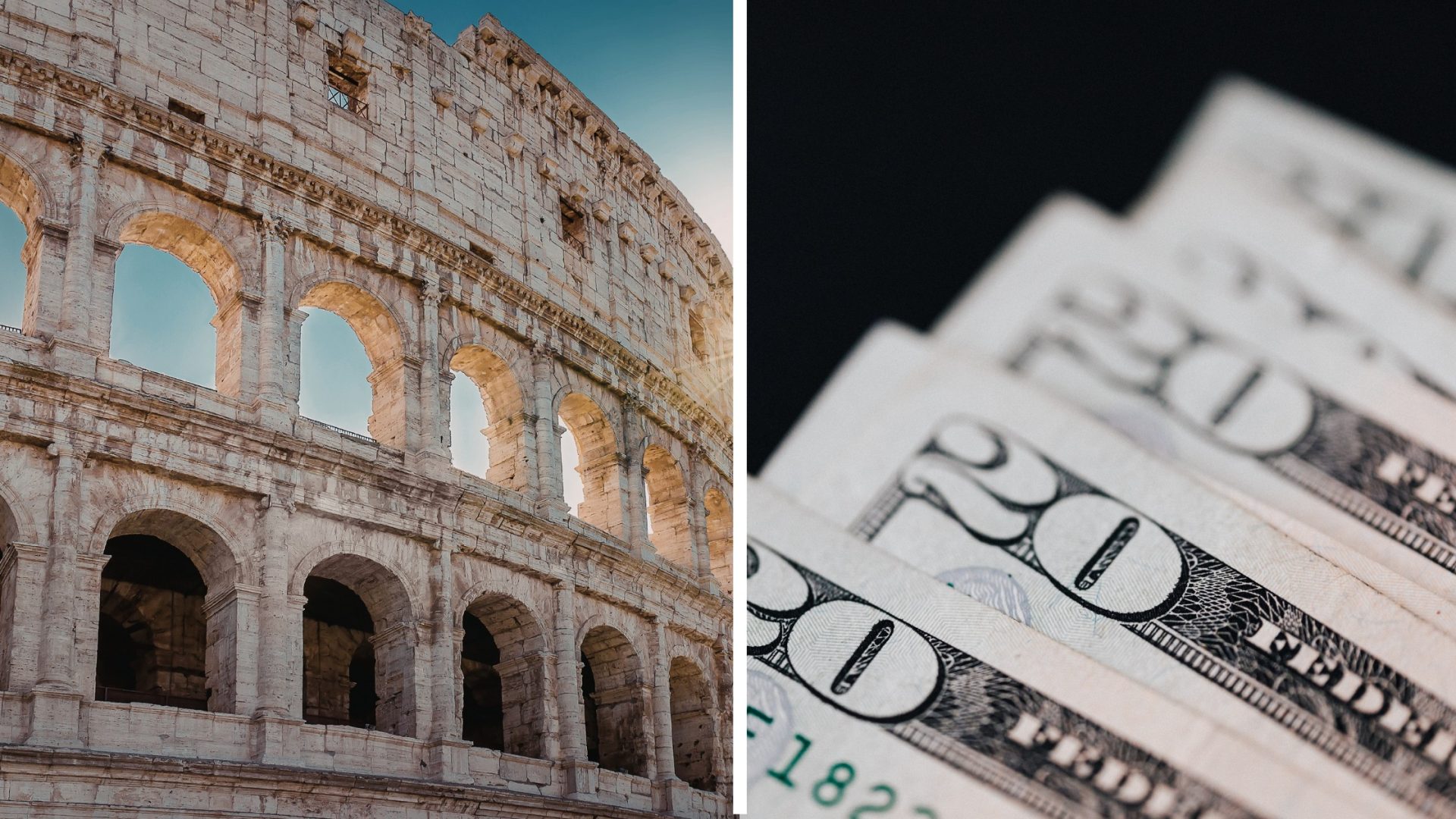
In the Roman Empire, attending public entertainment became one of the most important values and pastimes. We know from history that in the Roman Colosseum, where major events took place, gladiators fought and people watched. This amphitheater, built in the 70s AD, was the largest in the world and seated as many as fifty thousand people. You can also see in films like Ben Hur the chariot races that took place there. Society became about show and luxury.
Obviously, it isn’t bad to enjoy things of quality, but extravagance is taking nice things to a level of excess. This was also the problem with the corrupt Roman Catholic Church around the time of the Reformation. The corrupt, medieval church was marked by luxury and lavishness. The Roman community, too, was about lavishness instead of common sense.
We also see this in abundance in America.
America has become a place of lavishness, and this has only intensified over time. I grew up a Minnesota sports fan. In my early years, the Twins and Vikings played in the Metrodome. This was a budget facility that “did the job.” The Twins played in the spring and summer, and the Vikings in the Fall. The facility wasn’t a dump, but it was far from lavish. As time went on, these sports teams needed to “keep up with the Joneses.” What “got the job done” wasn’t good enough; they needed what the rest of the major cities in the US were building.
First, in 2010, the Twins built a State-of-the-Art stadium on the southwest side of Minneapolis. This one cost $545 million. A few years later, the Vikings followed with US Bank Stadium on the other side of town. The new Vikings stadium cost the lofty price of $1.1 billion. The values of our society became evident. Now the American public values sports and other entertainment far beyond what their level of importance ought to be.
In 2023, Texas A & M football coach Jimbo Fisher was paid $76 million to no longer be their coach. Half a century ago, this would have been unthinkable, but in our day, this is commonplace. There is an entire city in America built for entertainment and luxury, Las Vegas. The city is known as “America’s Playground.” Once an obscure place in southern Nevada, it has become the center of entertainment for America and the world. This occurred as the desire for entertainment and lavishness skyrocketed in the second half of the 20th century.
The Church in Times of Entertainment
This desire for entertainment and luxury has very much made its way into the American church. When people walk into many mega churches, it feels like you’re walking into a concert, not a worship service. The mounting love of show and luxury has indeed made its way into what is designed by God, a sacred place. Churches on Sunday mornings feel more like going to a movie or show. These “Christian attraction centers” draw in lots of people because their desire for entertainment is satisfied. Most countries don’t have this, but in America, a nation overtaken by show and luxury, churches that entertain are all too common.
Entertainment Over Church
What is interesting is that economically, our nation is in a bad place, but that does not keep taxes from rising in order to keep all of this luxury. At a time when our nation should be cutting back, luxury only increases. But this is what our nation values. Look at churches on Sundays versus NFL football. The price of a sports ticket is astronomical, but people pay it, and every seat is filled. People are paying money that would have previously been enough for a vacation, but they will sit in a crammed area in a loud environment for three hours, spending their entire paycheck (and often beyond). It is hard to find any church in America that is filled on Sunday, and it seems that the ones that are filled are the ones of show and luxury. American citizens’ misplaced values are on display every time Sunday rolls around.
Excessive Entertainment Makes a Weak Society
We have a clear obsession in our society with show and luxury. It used to be that houses were more modest, but now, especially as you drive in metropolitan areas, average houses would have been mansions only fifty years ago. We don’t have money, but we do have extravagance. America is a nation very much driven by entertainment. The Roman Empire also experienced this. Nice was not good enough; society demanded palaces. Hard work ethic was not a focus; laziness and entertainment were.
There was a time when America had a great work ethic. The work ethic of our nation has greatly declined, and one of the main forms of laziness and entertainment is people’s fixation on their phones. People don’t even have to go to a show anymore; they just go straight to their devices. Driven by entertainment, we’re now unable to win wars as we did in the past (American Revolution, WWI, WWII, etc.). It takes strong inward virtue to win a war and accomplish worthy endeavors, but as a whole, we are marked by lavishness and a love for entertainment, not virtue. This kind of living eventually led to the fall of the Roman Empire, and we need to be students of history, understanding that it will be America’s fall as well, unless our nation changes course.
The Right Priority
The Bible’s focus is far different than the immoral society that we live in. Scripture charges us to make the most of this life, looking forward to the life to come. It starts with having a relationship with Christ (John 3:16) and then walking in the Lord’s ways (2 Corinthians 5:17). Included in this is enjoying God’s gifts (1 Timothy 4:4-5), but enjoying His gifts is different than idolizing them (1 John 5:21). The apostle Paul wrote that our focus needs to be on what truly matters (1 Timothy 4:8; 6:17-18). Indeed, the focus is a heavenly one and not earthly (Philippians 3:14).
Jesus warns us of pursuing things like entertainment and luxury to the neglect of what matters:
“Do not lay up for yourselves treasures on earth, where moth and rust destroy and where thieves break in and steal, but lay up for yourselves treasures in heaven, where neither moth nor rust destroys and where thieves do not break in and steal. For where your treasure is, there your heart will be also” – (Matthew 6:19-21).
The apostle John also provided this clear admonition:
“Do not love the world or the things in the world. If anyone loves the world, the love of the Father is not in him. For all that is in the world—the desires of the flesh and the desires of the eyes and pride of life —is not from the Father but is from the world. And the world is passing away along with its desires, but whoever does the will of God abides forever” (1 John 2:15-17).
When an individual or a society is God-fearing, the focus is on the inward (Matthew 22:37-39). This leads to a depth of life that is truly worth living (John 10:10). As the Roman Empire pursued show and luxury, they experienced instant gratification (Philippians 3:19), but missed out on what truly brings satisfaction (John 6:35) and what truly matters. The results of this living went beyond personal misery to societal malaise. The consequence of their choice was a crumbling empire.
Will America reorient its priorities to avoid the same future? Only time will tell. But each Christian has a responsibility. To carry out a pattern of living for the Lord that will bless an entire nation (Proverbs 14:34).
Next, we will look at Gibbon’s fourth reason why the Roman Empire fell, its relevance to America: “A Widening Gap Between The Very Rich and The Very Poor.”
Related Posts
-
Are We Following The Roman Empire’s Path of Decline? Part 3: An Increased Desire to Live off the State
Seth Brickley
-

Feminism: The Rot at America’s Root
Philip Nier
-

Gender Wars vs. Combat Readiness: How Protestant Denominations Can Assist Military Planners
Brian Bagley
-

The Darkness Can Be Overcome: Reflections on the Exertions of William Wilberforce
Christopher Collins