Not Necessarily. But let me explain further.
I’ve been a teacher for over a decade, eight of those years in America’s public school system. I’m very familiar with their interworkings. I’ve worked in urban, suburban, and very rural schools, among most demographics present in the US. Interestingly enough, I was homeschooled from kindergarten to 12th grade, so my initial introduction to public schools was quite shocking. I knew the system was fraught with problems, but I didn’t realize how foundational the issues in our schools were: Buildings falling apart, widespread violence, a complete lack of discipline and respect, and copious amounts of sexual grooming through “young adult literature” and “ally” teachers.
But that was in an urban district. After a few years, I was in the middle of the American heartland at a K-12 school where each of the problems mentioned above was far less pronounced. It was then that I woke up to the academic issues of the “good” schools: Children are so very often reduced to a number on a data sheet, standardized testing is the law of the land, and really the only important academic factor. Long hours are spent sitting, looking at screens under demoralizing fluorescent lights do not make anything better.
All this to say is that I fully realize the issues of our public school system; in fact, I could spend hours talking about issues you likely don’t even know about. I have no plans to send my children to public school, even a “really good one” with teachers I trust. The education format itself is too detrimental and anemic to their development. Unless there is a serious decentralization and reformatting of the entire system. My wife and I are not going the public school route with our children.
However, if we raise the level of something to a blanket sin, then we had better be very sure that it is, always, in all circumstances. Sin is serious. Accusing other Christians of sinning is equally serious. I would posit that what some have identified as sin may actually fall into the category of wisdom, or in this case, a lack thereof.
Responsibility to Educate
One of the features of Christianity is its moral command to educate children, specifically your own:
“Train up a child in the way he should go; even when he is old he will not depart from it.” (Proverbs 22:6)
“Fathers, do not provoke your children to anger, but bring them up in the discipline and instruction of the Lord.” (Ephesians 6:4)
“You shall teach them to your children, talking of them when you are sitting in your house, and when you are walking by the way, and when you lie down, and when you rise.” (Deuteronomy 11:19)
There are no copouts in our faith when it comes to raising our children “in the nurture and admonition of the Lord.” Add to this the long list of Proverbs that highlight the importance of imparting wisdom to our children:
“The fear of the Lord is the beginning of wisdom, and the knowledge of the Holy One is insight.” (Proverbs 9:10)
“Give instruction to a wise man, and he will be still wiser; teach a righteous man, and he will increase in learning.” (Proverbs 9:9)
“The rod and reproof give wisdom, but a child left to himself brings shame to his mother.” (Proverbs 29:15)
We will give an account of how we imparted knowledge, wisdom, and righteousness to our children. The choice of how they will be educated is part and parcel to this mandate. We must also make this choice with great concern and consideration, but rest in the truth of God’s sovereignty, and that, incredibly, He loves our children even more than we do.
Could Sending Your Children to Public School Be Sinful?
If you understand the risks, dangers, and detriments of doing so and don’t care, then yes, it very well could be sin. You have a responsibility to raise up your children in wisdom and righteousness. Many parents choose comfort, convenience, and the maintenance of a specific standard of living over the academic, social, and spiritual care of their children. Is a new car, a larger house, living in a particular locale, or remaining in a specific profession worth turning the bulk of your child’s education over to the state?
It should be recognized that the entire social fabric of our civilization promotes public schooling while castigating those who choose another avenue. In countries like Germany and Sweden, homeschooling isn’t even an option. In graduate school and throughout my career, I’ve been privy to dozens of conversations concerning homeschooling, and have heard the scorn, ridicule, and demonization emanating from public school staff, university faculty, and teachers’ union representatives. If you choose not to send your kids to public school, you are swimming upstream. Fears about a lack of socialization or winding up “weird” often surface even at the suggestion of homeschooling.
Many parents don’t give a second thought to other academic options. In many ways, this is understandable. Widespread home and private schooling are relatively new. The overwhelming majority of Americans, Gen X and before, all attended a public school system that was more academically effective, socially sane, and culturally homogenous. But that system no longer exists. It’s been replaced by a highly multi-cultural techocracy that features collapsing standards, failed literacy, and moral anarchy.
Particular Contexts
But sweeping generalizations (i.e., “sending your kids to public school is always a sin”), without context, are not always helpful either. The situation for each family, even in the US, is going to vary depending on region, family circumstances, the maturity of the children, and, sometimes, financial capability.
There are Christian families, especially in very small towns, that have been able to flourish even in the public education system. Much of this is due to the manageable scale of the school districts. Some Christian parents are unable to remove their children from public school due to divorce arrangements or other significant life disruptions. This doesn’t mean the parents are in sin; they are often just trying to make the best of a bad situation.
Many parents turn their children over to private schools, often at great financial cost, hoping that because they removed them from the public school system, they’ll do better. However, private schools are often bound by the same standardized testing, stale academic format, and cultural problems. Many private schools are excellent–some are just public schools with prayer before class and chapel on Fridays.
The Wisdom of Exiting Public Schools
The main reason sweeping generalizations about public schools are made is that conservative, Christian families that have long advocated for alternatives to public education have been shamed and bullied about the educational choices they’ve made for their children. In addition, any discussion of schooling choice in the Evangelical world has generally been dressed in profuse levels of nuance.
In the context of American public schools in 2025, not much nuance is needed. While I would not ever make a blanket pronouncement of sin on anyone who puts their kids in public school, I would strongly encourage parents to consider the wisdom of doing so. In that spirit, here are several tangible reasons why you should consider other educational options:
Protecting Your Children
We’re reminded in 1 Timothy 5:8 that whoever does not provide for his family is “worse than an unbeliever.” Surely, providing for their physical protection is the most crucial aspect of this mandate. American public schools are open to the entire world. Due to several political developments in the early 80s, anyone from anywhere on the planet can move to the US and immediately enroll their child in the local public school with absolutely no vetting. This means that while you may be able to control what region your child’s school is in, you have no say in who sits next to them in class.
Facilitating Excellence
With all the commands to teach wisdom to our children, we should endeavor to make sure the academic system they’re engaged in is actually facilitating the cultivation of wisdom. The public school system, because of its commitment to “equity,” discourages excellence, wisdom, and the pursuit of knowledge. Teachers are typically overwhelmed by students with special needs (upwards of 15%) and students who don’t know English (upwards of 25%), so they don’t have the time or energy to devote to students who are ready for the next academic concept. Add to this the structure of a school day: Students stand in lines and go through fairly meaningless routines designed to maintain some kind of controlled chaos. Despite this, constant interruptions get in the way of academic progress. Almost any other model of schooling encourages more critical thinking, academic rigor, and creativity.
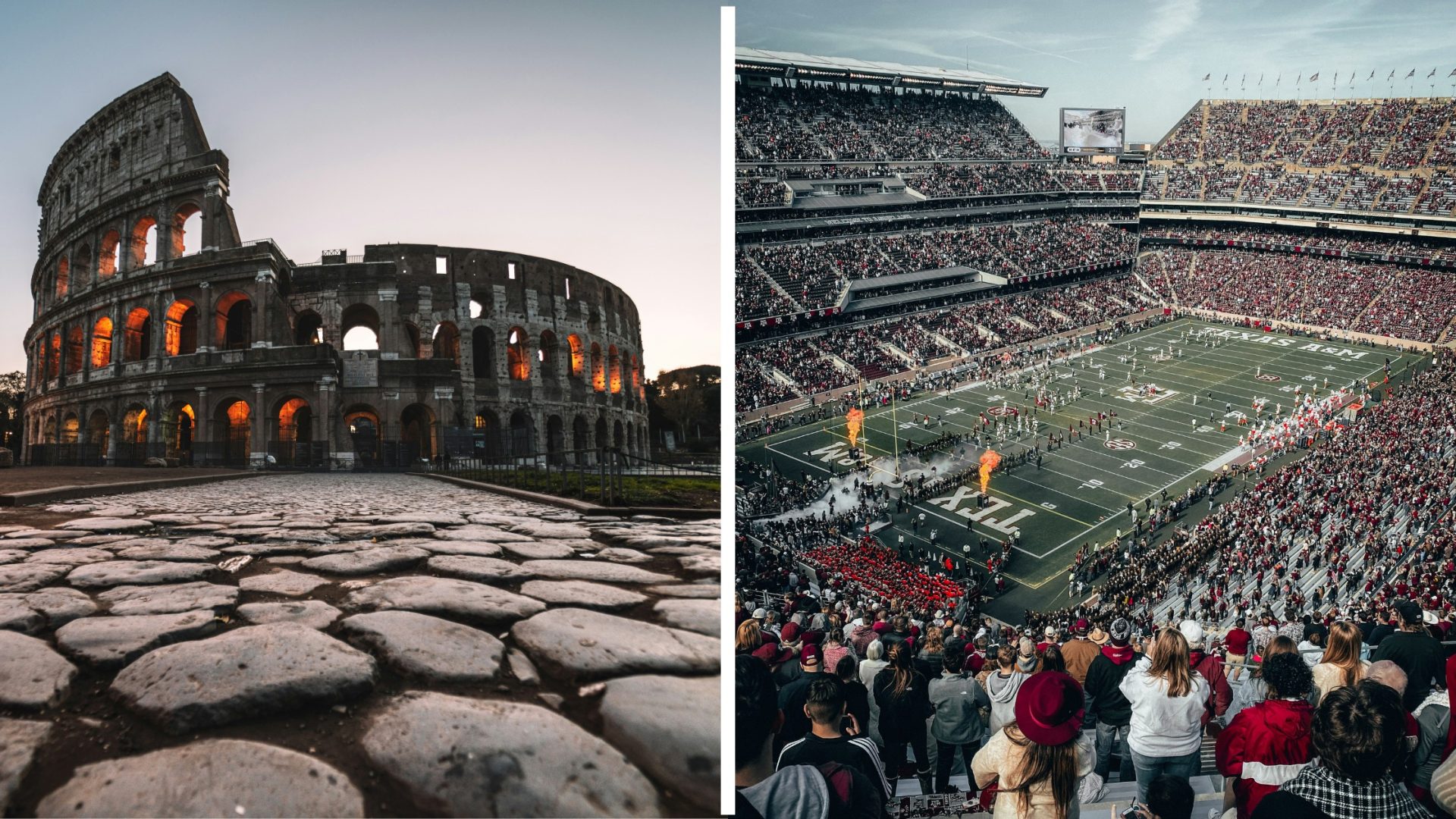
“If you send your kids to Caesar, don’t be surprised if they come home speaking Latin”
The most crucial reason for avoiding American public education is the lack of control you’ll have over what your child learns. Even in very conservative, Christian parts of the country, school curriculum, a massive industry, promotes socialistic ideology, religious pluralism, multicultural idealism, and evolutionary theory. The outflow of these ideological commitments is seen in widespread tech addiction, arrested development, early sexualization, and a steady eroding of religious faith. Again, even if the teachers are godly, Christ-honoring individuals, you have no control over the students sitting next to your child, and they could come from anywhere on earth. And these classmates will exert an influence on your child. To bluntly illustrate this, I have never worked in a single district where first graders showing each other pornography was not an issue.
Towards Wisdom
Ultimately, the decision of how and where to educate your children will be something for which you will answer to God. In our time of rapid social, technological, and moral shift, don’t assume that where you were educated is anything like what your children will experience. Overwhelmingly, the America that anyone north of 30 grew up in no longer exists. And that very much includes public, government schools. Pursue wisdom in your decision-making. Finally, trust God with your children and their education. At the end of the day, it’s He who holds them in His arms.
Photo Credit: Unsplash