I am, by God’s incredible grace, a third-generation Christian on both sides of my family, now raising a fourth. I was blessed to grow up surrounded by the rich and profound truths of the gospel, that Jesus Christ was born of a virgin, lived a perfect life, was crucified for my sin and the sin of the world, and rose again on the third day. From my earliest memory, that truth has been the air I breathe.
The Old Testament tells a familiar story. God calls His people to Himself; they obey for a time; then they drift into sin, idolatry, and rebellion. Judgment follows, repentance comes, and the cycle begins again. It’s a story that shouts the same truth from every page: no amount of law or human effort can save us from our sin. Man, left to himself, is utterly incapable of keeping God’s law. We need a Savior, and that Savior is Jesus Christ.
Jesus made our redemption possible. Now, our daily calling as believers is to walk in personal sanctification, to preach the gospel to ourselves, repent quickly, and love and serve the Lord. And for most of my life, I believed that this service happened almost exclusively within the church and church body.
But over the past decade, I’ve come to see that this beautiful truth, while essential, is only the baseline of the Christian faith, the foundation, not the house. I began to recognize a frustration that I could no longer ignore. Growth, for me, seemed shallow and repetitive. Small-group Bible studies were good but predictable. I learned to have “pocket sins” ready to confess at group gatherings. I knew the rhythm. My faith was genuine, but it was safe. There was little tension, little stretch. Spiritual growth was small, contained, and comfortable. Eventually, I found myself bored.
Then came the cultural earthquakes: the 2016 and 2020 elections, the BLM riots, the social justice barrage, and COVID-19. Crises that revealed what I was made of, or rather, not made of. I looked to the church for guidance, for prophetic voices to speak clarity into the confusion, but the response remained steady: preach the word, leave the Spirit to convict and believers to apply it. The result was a church with a pure gospel, but a small one.
I began to find teachers and thinkers who didn’t just believe the same gospel but stretched it out to all the edges, applying it to art, politics, education, science, and culture. They showed how every corner of creation belongs under the lordship of Christ. They took the same truths I had known since childhood and painted them across the entire canvas of life. I could hardly grasp the fullness of this stretched-out gospel. It was not a distorted or translucent gospel, stretched thin like a balloon, but one that held form and unfolded layer after layer, each revealing unimagined color. The beauty was unmistakable and unforgettable. There was no going back.
When I brought these thoughts to pastors and fellow believers, hoping to share their beauty, I was met mostly with discomfort, confusion, and a gentle, yet dismissive, pat on the head. My attempted replica looked like a child’s stick-figure sketch; my desired symphony, mere muddled noise. I was caught between the beauty my eyes could see and the frustration of not being able to express it. And that’s the space I want to explore.
A Foundation for No House
Many churches work tirelessly to build a good, solid, firm foundation. They preach sound doctrine, emphasize salvation by grace through faith, and insist on the inerrancy of Scripture. Praise God for that. A strong theological foundation is vital for any lasting structure.
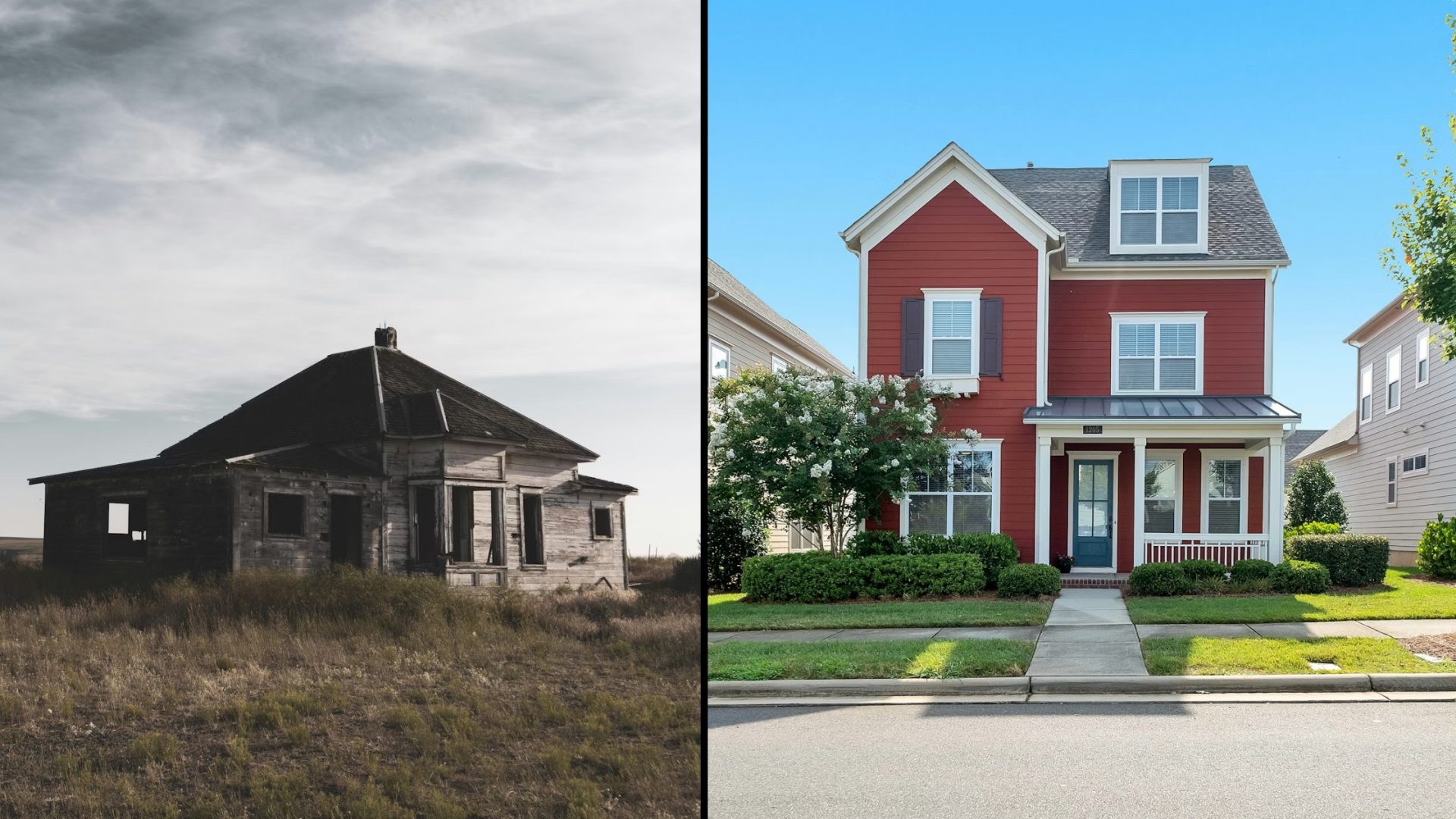
But somewhere along the way, we mistook them for the finished work. Week after week, we lay the same concrete truths, flattening and smoothing and reinforcing them, yet never building upward. We become experts in foundation work, confident that the slab is straight, proud that the footings are deep, but we forget that a foundation, by itself, is a lonely thing.
Foundations inspire potential but cannot display the beauty of what they were made to hold. They lack the safety of walls, the warmth of a hearth, the shelter of a roof, and the light that pours through windows. They lack the richness of natural wood blended with the beauty of mosaic. They have no furnishing for comfort and rest. And yet, much of modern Christianity is content to live on bare concrete, grateful for salvation, certain of heaven, but hesitant to build anything that might touch the world with shape, color, and life.
When the gospel is reduced to the message of personal forgiveness alone, it is stable but sterile – a foundation for no house.
Hide the Recorder
Every parent knows the list of dreaded toys their children receive from a relative. Noisy, chaotic instruments of supposed joy. Chief among them: the recorder. When first received, the child plays it endlessly, discovering infinite sounds and endless possibilities. But for the parent, it’s all squawk and chaos. Eventually, in the quiet of night, the recorder is hidden away. Peace returns. Problem solved.
Peace returns, but it is the shallow peace of avoidance and neglect. The easy solution spares the ear but starves the soul. Hidden away, it never matures. The parents have removed the noise but killed the symphony.
That’s how many churches handle those who dare to explore, question, and create from the gospel’s fullness. The desire to apply Scripture to every sphere of life is often seen as noise: distracting, divisive, or unnecessary. So, for the sake of order and peace, the recorder is hidden. The creative energy that could have woven melodies and harmonies into the powerful crescendos of a symphony is instead silenced.
The Gift of Friction
If foundations give shape and instruments give sound, friction gives movement. Over the years, I’ve come to notice how easily churches, including those I’ve been part of, strive to protect themselves from friction, tension, and disagreement. It is almost always done in the name of unity. Yet friction itself is not the enemy.
Friction keeps a belt from slipping on an engine. It gives a climber a grip on the rock face. It lights a match. Rightly used, friction produces forward motion, traction, fire, and light.
The church’s aversion to friction has produced smooth, well-oiled ministries that rarely move into the world they are called to reach. Even in teaching, friction and tension are often avoided. Sermons stay faithful to the text, yet too often stop at the tension point, failing to stretch for fear the belt might break. Discipleship becomes polite. Courage is mistaken for combativeness; conviction, for pride. But without friction, there is no traction. Without traction, there is no movement toward the edges where faith takes form and truth takes hold.
When truth deepens and expands, friction becomes a gift that strengthens the body of Christ. Iron sharpens iron, after all, and that process is neither quiet nor smooth.
The absence of friction may bring calm, but it also brings stagnation. Better to have sparks than silence; better reform than dust.
When the House Comes Alive
A foundation is good, but it is not a home. A silent instrument is peaceful, but it makes no music. A faith with minimal friction is calm, but intentionally designed for slow, incremental, and guarded movement – no theological bruises, bumps, or broken bones. The church is meant to be more than safe, more than orderly. It is meant to be alive.
When believers take the truths of Scripture and stretch them to the edges of life, into the arts, sciences, trades, the classroom, the home, the city council, the neighborhood park, and the business world, the gospel takes on dimension and color. The world begins to see not only what Christians believe, but how those beliefs build, protect, heal, inspire, and restore.
This kind of faith requires courage. It will draw misunderstanding, offend those who prefer the safety of the familiar, and endure the scorn promised by Christ. But it will also ignite hearts, stir imaginations, and reveal a gospel that is not small or safe, but full and glorious.
I want the church to remember that she was never called to remain a foundation, or to silence her song, or to hide her candle. Christ did not redeem us to preserve a quiet peace, but to build His kingdom in full view of the watching world. The gospel is not fragile. It was made to stretch to every edge of creation, and when it does, its beauty will be unmistakable and unforgettable.
Photo Credit: Unsplash