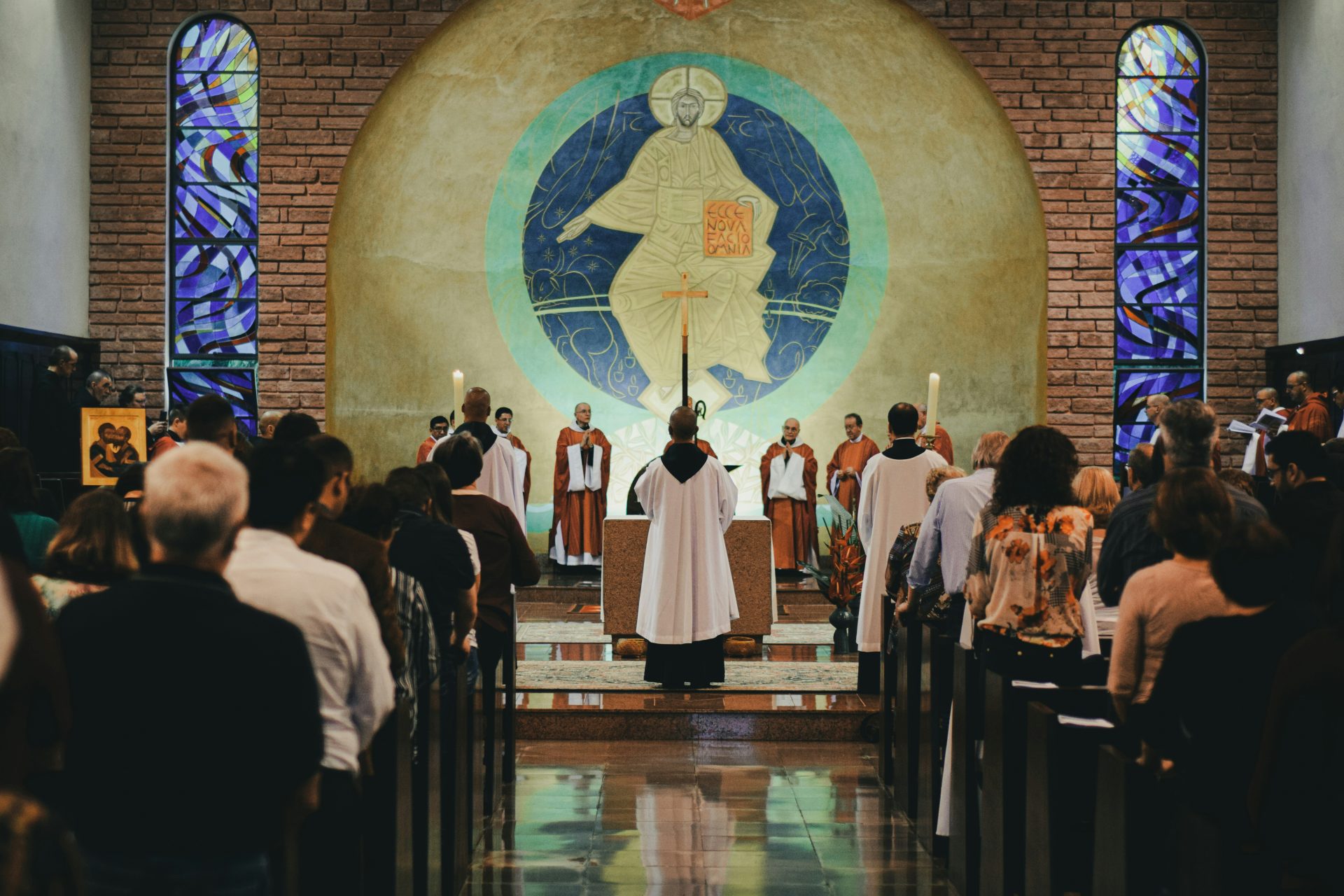
In a recent post by an Eastern Orthodox X account, the poster stated, “I’m genuinely curious why Protestants worship the Bible but not God Himself.” When someone responded by stating that in some cases this may be true, the Eastern poster retorted “In every case it’s true.” Something deeper than surface-level polemics is at stake here even if that post was “bait” and made merely for the sake of farming outrage.
Societal Deterioration
Cultural fads are nothing new and have always manifested broadly and among various subcultures. Particular movements, ideas, and even fashion choices will gain traction and ride out their momentum until something inevitably comes to take its place next. Across online Christian communities, this vigor spreads through platforms like Instagram, TikTok, and X, fueled by ecclesial apologetics centered on Roman Catholicism and Eastern Orthodoxy. Oftentimes people raised in Evangelical or Non-Denominational households will readily observe the rapid deterioration of society. This involves seeing the willingness of the mainline churches to capitulate on doctrines essential to the Christian faith and even compromises within their supposedly conservative denomination or parachurch organization on things like women’s ordination or same-sex attraction. These observations of decline, not only within society but among mainline Protestants and conservative Evangelicals, lead to a feeling of incredible instability. Seeking to hold onto Christ in an ever-changing culture, many will look to institutions historically rooted and unmoving, often finding such in the Roman Catholic and Eastern Orthodox traditions.
A Spirit of Charity
Convicted Protestants may disagree with this, but the move can be understandable. We should always be willing to engage in a spirit of charity and with a spine of steel in holding fast to our historic Protestant convictions. With the combination of a heavily monetized internet in tandem with attempts to appeal to the masses, the democratization of pop-level apologetics has produced disastrous results. “Pop-level” apologetics is a shorthand term for popular-level apologetics done for the sake of appealing to as wide a base as possible through broad strokes, such that all that can read will understand the basic sense, as long as they wield a little background knowledge. Due to the nature of social media, serious arguments and attempts to engage or understand are not what will draw popularity. Rather, provocative posts that intentionally portray the other side in the most uncharitable light will gain traction. The nature of social media has poisoned the well, where people attempt to farm as much money (or dopamine) via spewing basic assertions, raking in attention from those who agree, and seething from those who differ.
This is not to say that there is no place for polemical gestures or even mockery. The ultimate issue occurs when sin is introduced, namely, the bearing of false witness.
Lying for Clicks
Looking back to the aforementioned post on X, the deeper issue at play pertains to the willful slander of those who profess Christ. At times, trolling online may (in principle) be permissible, what is not is breaking the 9th commandment for clicks. The author of Hebrews states in chapter 10 verses 26-27 “For if we sin wilfully after that we have received the knowledge of the truth, there remaineth no more sacrifice for sins, But a certain fearful looking for of judgment and fiery indignation, which shall devour the adversaries.” A willful violation of the law of God without repentance is a terrifying thing. Attached to it is the threat of God’s eternal judgment. This is no longer trolling, but the endangerment of one’s soul. Our Lord Jesus’s words in Matthew 12:36 ought to cause anyone who engages in online polemics to do so with trembling, as he states, “But I say unto you, That every idle word that men shall speak, they shall give account thereof in the day of judgment.”
The fruit of online apologetics is such that those who desire attention can receive it through outlandish claims and outright misrepresentation. This is not limited to Roman Catholics or even Eastern Orthodox online but is observable in Protestant accounts who outright lie about distinctive Roman Catholic or Eastern Orthodox beliefs. In engaging with these beliefs one must have the utmost care to not bear false witness, not for the sake of being a nice guy or being winsome but because every idle word will be held before you on the day of judgment. This exhortation ought not be seen as a discouragement away from any form of ecclesial apologetics or for putting forth one’s position for the sake of facilitating real conversation and debate, it is, rather, a call to remember the words of our Lord and how seriously he takes slander.
Engage or Ignore?
What then is the solution to this plague of pop-apologetics? There are a couple of things one can do and each is dependent on the circumstances. The first option is to engage and expose the lies. In doing so one is able to offer a swift rebuke to lies and publicly show those who may be scandalized that what is being put forth is a falsehood. However, this sadly plays into the game of feeding attention to those who want it and potentially giving them revenue if they get enough clicks. The second option is to simply ignore what is being put out there. The positive to this is that one retains their sanity and doesn’t give the poster what they want, namely, attention. But the negative is that the poster carries the possibility of deceiving those who may be persuaded by what is being promulgated.
Though these two options are different, they are well suited to particular circumstances. If one feels the need to clarify a position or dismantle outright lies, he is free to do so. Yet there are also circumstances in which one may shake the dust off their feet and mute, seeing it would be of no benefit to feed attention. In posting publicly on social media, one must always remember that if they proclaim Christ they necessarily represent him as well and ought to emulate him. Our Lord calls us to very high standards and demands those who are willing to publicly represent him do so in faithfulness. It is no longer we who live, but Christ who lives in us.