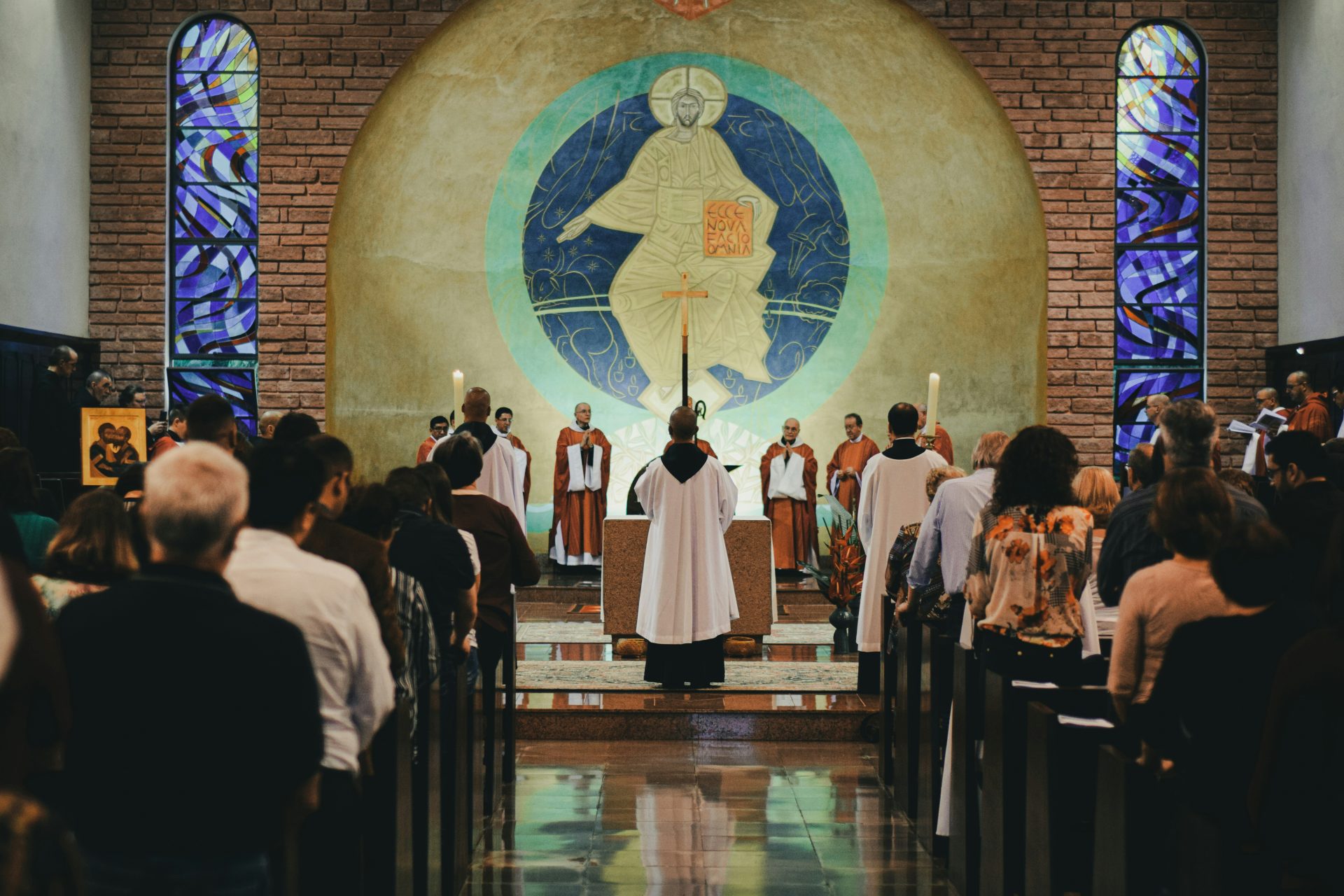
It happened the way so many theological shifts begin today—not in a classroom or a denominational meeting, but in a casual conversation after church. After the service, while people lingered in the aisles catching up, a man from our congregation pulled me aside. We were discussing an issue where Scripture speaks plainly, but obedience has become culturally uncomfortable. He wasn’t angry. He wasn’t combative. He was calm, but concerned about how our church would be perceived in light of the culture today. At one point He paused and said, “Well, I’m just not a fundamentalist like you are.”
I smiled in the moment. Pastors learn to do that. But internally, I bristled. The word landed like a subtle rebuke. Not a theological argument—just a label. What he meant was clear: You’re being rigid. Narrow. Out of step. And I didn’t like it. No pastor enjoys being reduced to a caricature for simply taking Scripture at its word.
But over the next few days, that word stayed with me.
When a Label Reveals a Deeper Problem
Why did being called a fundamentalist bother me so much? In modern Christian discourse, fundamentalist is almost always a slur. It evokes images of angry rule‑keepers, cultural isolation, and graceless judgment. It’s shorthand for someone who “just doesn’t get it.”
But the question that wouldn’t leave me alone was this: Was the term actually wrong—or had I simply accepted a distorted definition of it? So I did what pastors are supposed to do. I went back—not to social media or opinion pieces—but to history.
What Fundamentalism Was—and Wasn’t
Historically, fundamentalism did not arise from fear or hostility toward the world. It arose as a defense of Scripture. In the late nineteenth and early twentieth centuries, the authority of the Bible was being openly undermined by higher criticism and theological liberalism. Fundamentalists were not attempting to be abrasive or reactionary. They were attempting to remain faithful.
At its core, fundamentalism asserted something remarkably simple: the fundamentals of the faith matter, and Scripture—not culture—defines them. There was no political platform. No culture‑war strategy. Just the conviction that God has spoken and that His Word is not ours to revise.
Evangelicalism’s Promise—and Its Drift
Evangelicalism emerged, in part, as a gentler alternative. It emphasized evangelism, relational engagement, and love for the lost. In many ways, this was a needed corrective. The gospel must always be proclaimed with love. Truth without love can be cruel—and frankly not truth at all.
But something changed.
Over time, evangelical stopped functioning as a theological category and became a cultural one. It increasingly signaled coalition rather than conviction. Unity began to outweigh clarity. Mission drifted away from doctrine. Love was redefined as affirmation rather than obedience.
What was once a bridge slowly became a solvent.
Today, evangelicalism often operates as a form of ecumenical minimalism—believe as little as possible, speak as carefully as possible, and avoid anything that might offend. This is seen in organizations once considered pillars of Christianity and the evangelical movement, such as The Gospel Coalition, Christianity Today, Intervarsity, and World Vision. The rallying cry has sounded good, “It’s all about the gospel!” “The Gospel above all!” But when the gospel is stripped down far enough, it does not become more compelling. It becomes powerless.
A Gospel That Has Lost Its Power
In 1 Corinthians, the apostle Paul warned the church about this danger directly. The gospel does not lose its power because it confronts sin—it loses its power when it is emptied of truth. When Christ is reduced to inspiration rather than Lordship, the cross to therapy rather than substitution, and discipleship to optional enrichment, the result is predictable.
A gospel that never confronts sin cannot save sinners.
A gospel that demands nothing produces nothing.
A gospel that avoids doctrine cannot form disciples.
This is where much of modern evangelicalism now finds itself—well‑intentioned, carefully branded, and spiritually anemic.
Why We Need New Fundamentalism
This is why I am calling for a return—not to old fundamentalism with all its historical excesses—but to New Fundamentalism.
New Fundamentalism is not angry. It is not reactionary. It is not afraid of engagement. New Fundamentalism is confident that God’s Word is sufficient, clear, and authoritative, and that obedience to it leads to life, not harm. It understands that true evangelism begins and ends with discipleship, and that discipleship begins and ends with teaching everything Jesus commanded, yes, it’s what the great commission says.
New Fundamentalism insists that:
• Scripture does not need updating—it needs obedience.
• Love does not cancel truth—it requires it.
• Unity does not come from doctrinal minimalism—it comes from shared submission to Christ.
• The mission of the church is not relevance, but faithfulness.
Why This Matters for Christian Leaders
Pastors and Christian leaders feel the pressure acutely. The temptation to soften, qualify, or quietly ignore difficult texts is immense. Cultural approval is seductive. Institutional survival can feel urgent. But history is unkind to churches that trade conviction for credibility.
New Fundamentalism calls leaders to stop apologizing for clarity and start recovering courage—to trust that God’s Word still accomplishes what God says it will accomplish. The Holy Spirit works through truth, not around it.
Owning the Word Again
So if “fundamentalist” means someone who believes Scripture is authoritative, sufficient, and meant to be obeyed according to its plain meaning—and that is truly what the term means— then perhaps the label is not an insult after all. And perhaps such insults should be leaned into rather than avoided. After all, the terms “Baptist” and “Christian” both originated as slights and insults.
Perhaps that man lingering in the aisle after service (who left for a conservative, but “don’t rock the boat” church soon after that conversation) was giving me a label I could hold on to. There are a lot worse things to be known for than teaching the plain meaning of the Word of God. The future faithfulness of the church just might be a new kind of fundamentalism, and its future will most likely depend on leaders who are willing to own it.